


The Case Study Solutions
The Case Study Solutions offers expert academic support for students struggling with complex... View more
Organizer:
- Organized by
-
-

Sanity Checklist vs Smoke Testing: Understanding the Difference
-
Sanity Checklist vs Smoke Testing: Understanding the Difference
In the world of software testing, terms like <em data-start=”116″ data-end=”134″ style=””>sanity checklist and <em data-start=”139″ data-end=”154″ style=””>smoke testing are often thrown around, sometimes interchangeably. While they both aim to ensure that a build is stable enough for further testing, they serve distinct purposes and are applied differently. Understanding the difference can save time, reduce confusion, and improve overall testing efficiency.
A sanity checklist is typically a focused set of tests conducted to verify that specific functionalities or bug fixes are working as intended. It’s like a quick reality check for the system after a new feature or patch has been implemented. The goal is not to test everything, but to ensure that the critical parts of the application are sane and functioning correctly before moving on to more comprehensive testing. For example, if a payment module is updated, a sanity checklist might include verifying successful transactions, error handling, and basic UI behavior.
On the other hand, smoke testing is broader. It’s often referred to as “build verification testing,” ensuring that the entire application’s core functionalities are operational after a new build. Smoke tests are designed to detect major showstoppers early, like broken login flows or crashing pages, so that testers know whether the build is stable enough to proceed with detailed testing.
Modern tools like Keploy can complement both sanity checklists and smoke testing by automatically generating tests from actual user traffic. This helps teams ensure that their critical workflows remain intact while saving time compared to manually writing test cases.
In practice, a sanity checklist is more specific and targeted, while smoke testing is broader and aimed at overall build stability. By using both thoughtfully, teams can catch major issues early, verify fixes efficiently, and maintain confidence in their releases. Understanding this distinction is key to building a smarter, faster, and more reliable testing process.
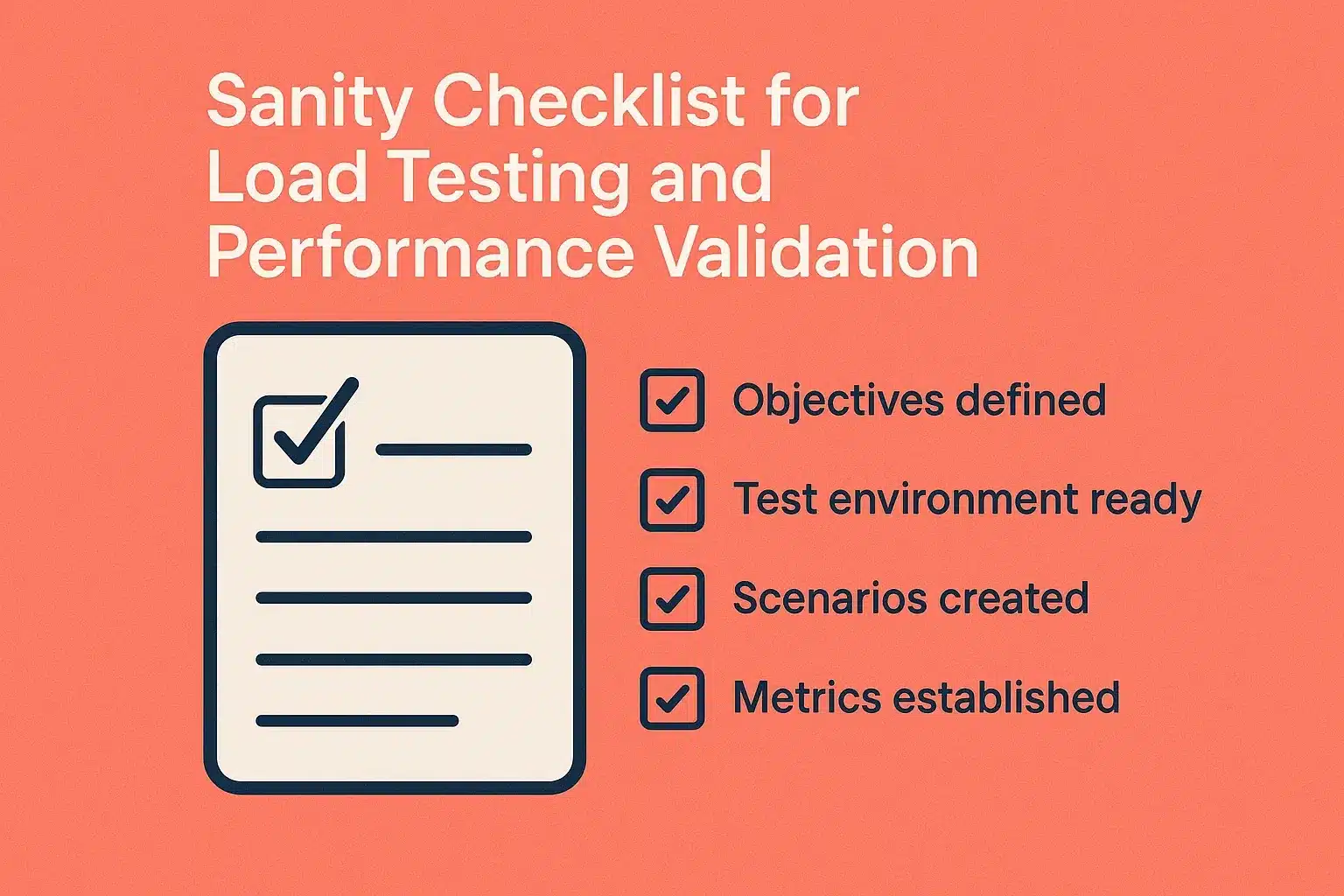
keploy.io
Sanity Checklist for Load Testing: Ensure Stability Before Performance
Discover why a Sanity Checklist is essential before load and performance testing. Learn how to validate environments, configurations, and data for reliable.
Sorry, there were no replies found.
Log in to reply.