


Software Testing Tips
A community space to share practical software testing tips, proven strategies, and insights for... View more
Organizer:
- Organized by
-
-

Making Regression Testing a Habit, Not a Hassle
-
Making Regression Testing a Habit, Not a Hassle
In fast-moving development environments, updates are constant—and so is the risk of breaking something that already works. That’s why <strong data-start=”213″ data-end=”235″>regression testing isn’t just a step in the process; it becomes a habit that helps teams maintain stability over time.
Instead of waiting until the end of a release cycle, teams often run these checks alongside everyday development. After each change, key features are quickly verified to ensure nothing critical has been affected. This ongoing approach reduces surprises and keeps the product in a reliable state.
To keep things efficient, teams usually focus on high-impact areas rather than retesting everything. Over time, they build a set of trusted scenarios that cover essential workflows. These checks can be run manually or automated, depending on the project needs and frequency of updates.
Automation, in particular, makes a big difference. It allows repetitive checks to run in the background, providing fast feedback without interrupting development. This is especially helpful when working with continuous integration pipelines.
As the product evolves, the testing approach evolves too. Keeping scenarios relevant and removing outdated ones ensures that efforts stay focused and effective.
By turning regression testing into a consistent practice, teams can move quickly while still delivering stable and dependable software.
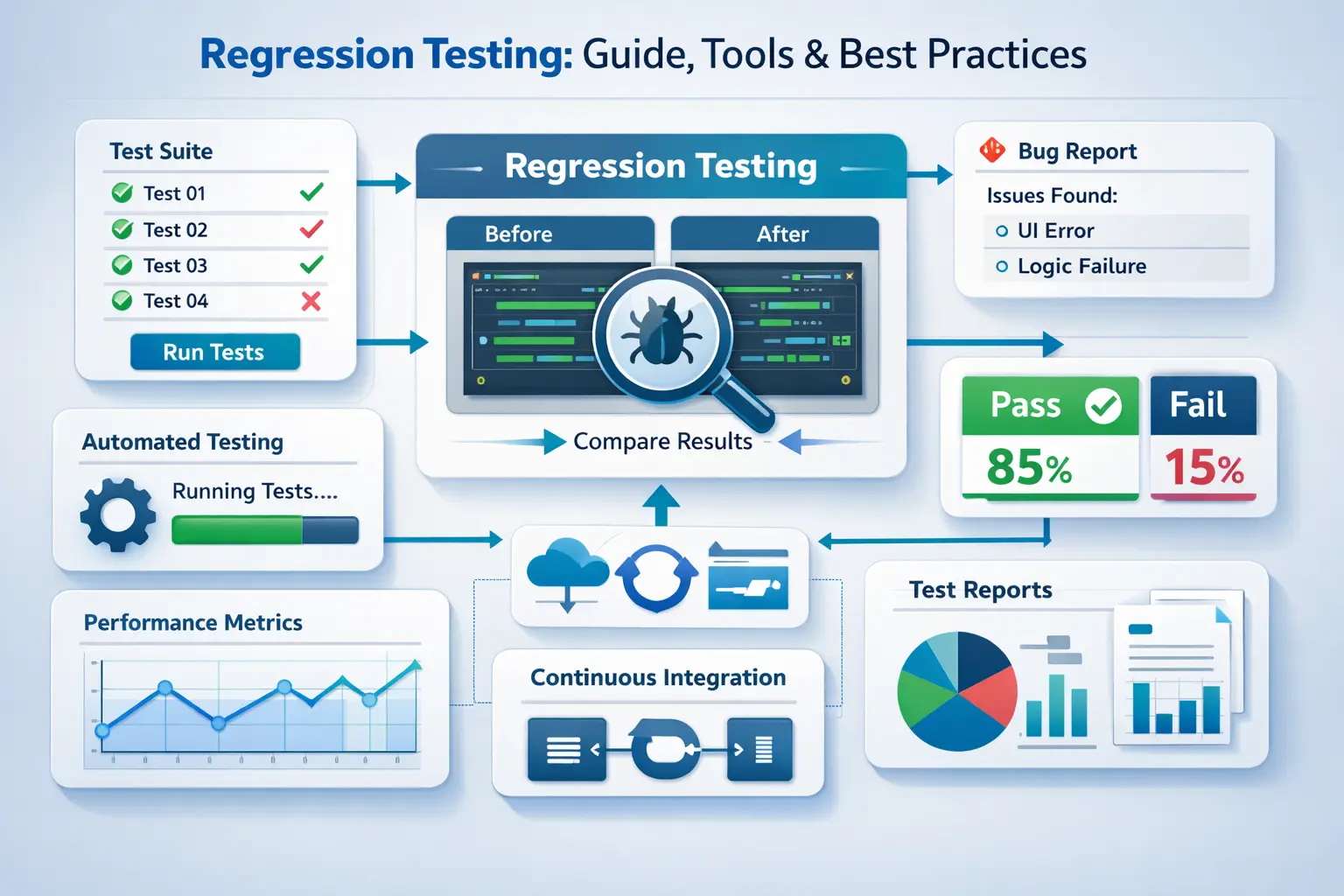
keploy.io
Regression Testing Guide: What It Is, Tools & Best Practices
Learn what regression testing is, why it matters & how to run effective regression tests with top tools, types & best practices for stable software releases.
Sorry, there were no replies found.
Log in to reply.