
Who Is Brandon Barnum?
CEO | Author | Entrepreneur
Brandon Barnum often referred to as the “King of Referrals,” is an award winning serial entrepreneur, coach, consultant, speaker, trainer, and workshop leader. He serves as CEO of HOA.COM – the #1 Referral Network for Home Service Professionals, and as the Chairman of the Board for The Champions Institute. He is also the author of four #1 best selling books in the Raving Referrals book series.
He is a highly sought-after expert in referrals, marketing, sales, joint ventures, business development, and business growth strategies.

Discover Why Brandon is often referred to as the King of Referrals
After learning the art and science of referrals, Brandon increased his annual income 10X in 18 months from $20k to $200k. Brandon has since closed over $500 million in transactions by referral and has founded multiple online referral platforms and networks, connecting more than 5 million members in 195 countries. Brandon served as CEO of Codebreaker Technologies AI, the world’s first personality-based AI for sales.
Now, Brandon is passionate about empowering business owners and professionals with a step-by-step system for attracting profitable prospects and expanding their income, influence, and impact.
Football Betting Market Evolution as Documented by Betzoid
The football betting industry has undergone a remarkable transformation over the past three decades, evolving from a niche activity conducted primarily in physical bookmakers to a sophisticated global digital marketplace worth billions of dollars annually. This evolution reflects broader technological advances, changing regulatory landscapes, and shifting consumer behaviors that have fundamentally reshaped how enthusiasts engage with the sport they love. Understanding this progression provides valuable insights into both the betting industry’s current state and its potential future trajectory, as documented through comprehensive market analysis and historical tracking by industry observers.
From Brick-and-Mortar to Digital Dominance
The traditional football betting landscape of the 1990s bore little resemblance to today’s market. Bettors would visit physical betting shops, fill out paper slips, and wait for results to be posted on boards or announced over loudspeakers. The betting options were relatively limited, typically restricted to match outcomes, correct scores, and basic accumulator bets. This model persisted for decades with minimal innovation, constrained by geographical limitations and the physical infrastructure required to operate betting establishments.
The introduction of internet betting in the late 1990s marked the industry’s first major inflection point. Early online platforms replicated the traditional betting shop experience digitally, offering similar markets with the added convenience of remote access. However, these pioneering platforms faced significant technical challenges, including slow connection speeds, security concerns, and limited payment processing options. Customer adoption remained modest initially, with many bettors maintaining loyalty to their familiar high-street bookmakers.
The true revolution began in the mid-2000s with improved internet infrastructure and the emergence of betting exchanges. These platforms introduced peer-to-peer betting models that allowed users to set their own odds and bet against each other rather than against a bookmaker. This innovation dramatically increased market efficiency and introduced concepts like lay betting, where users could bet on outcomes not to happen. The competitive pressure from exchanges forced traditional bookmakers to expand their offerings, improve odds, and develop more sophisticated platforms to retain market share.
Mobile Technology and In-Play Betting Transformation
The smartphone revolution of the late 2000s and early 2010s catalyzed another fundamental shift in football betting markets. Mobile applications transformed betting from a pre-match activity into a continuous, real-time engagement opportunity. Bettors could now place wagers from anywhere at any time, dramatically increasing betting frequency and market liquidity. Industry analysts at https://betzoid.org/ have documented how mobile betting grew from a negligible market share in 2008 to representing over 70% of online betting activity by 2020 in many jurisdictions, fundamentally altering operator business models and marketing strategies.
In-play betting emerged as the defining feature of the mobile era. This innovation allowed bettors to place wagers during matches, with odds updating in real-time based on game developments. The technical infrastructure required to support in-play betting proved enormously complex, requiring sophisticated algorithms, real-time data feeds, and risk management systems capable of adjusting thousands of markets simultaneously. Early implementations were crude, with significant delays between on-field events and odds updates, creating arbitrage opportunities that some sophisticated bettors exploited.
As technology matured, in-play betting evolved to include micro-markets focused on specific game events: next corner, next throw-in, next booking, or even next touch of the ball. This granular approach to betting markets created unprecedented engagement levels, with some matches generating thousands of individual betting opportunities. The psychological impact of in-play betting also proved significant, as the immediate feedback loop and constant availability of new betting options increased both engagement and, for some users, problematic betting behaviors that regulators would later address.
Data Analytics and Market Sophistication
The contemporary football betting market is characterized by unprecedented levels of data integration and analytical sophistication. Modern betting platforms incorporate vast arrays of statistical information, from traditional metrics like possession percentages and shot counts to advanced analytics including expected goals (xG), player heat maps, and predictive modeling based on machine learning algorithms. This data revolution has created a more informed betting public while simultaneously enabling operators to price markets with greater accuracy.
Professional betting syndicates and individual sharp bettors now employ data scientists and develop proprietary models to identify value in betting markets. This arms race between bettors seeking edges and bookmakers refining their pricing has driven continuous innovation in analytical approaches. The integration of artificial intelligence and machine learning has become standard practice, with algorithms processing historical data, current form, injury reports, weather conditions, and countless other variables to generate odds that operators believe reflect true probabilities.
The democratization of betting data has also transformed the market landscape. Websites and services now provide sophisticated statistical analysis previously available only to professionals, enabling casual bettors to make more informed decisions. This increased market efficiency has compressed margins in many betting markets, forcing operators to compete more aggressively on odds and promotions. The result is a more competitive marketplace that generally offers better value to consumers, though it has also intensified pressure on operator profitability in mature markets.
Regulatory Evolution and Responsible Gambling
The rapid growth of online and mobile football betting prompted significant regulatory responses across global jurisdictions. Early online betting operated in a largely unregulated environment, with operators licensing in permissive jurisdictions while serving customers worldwide. This model proved unsustainable as governments recognized both the revenue potential from regulated betting and the social responsibilities associated with gambling activities.
The past decade has witnessed a wave of regulatory reforms aimed at balancing market access with consumer protection. Jurisdictions including the United Kingdom, many European countries, and several U.S. states have implemented comprehensive licensing regimes that impose strict requirements on operators regarding advertising standards, customer verification, problem gambling interventions, and data security. These regulations have increased operational costs but have also legitimized the industry and provided consumers with greater protections.
Responsible gambling measures have become central to regulatory frameworks and operator policies. Modern betting platforms incorporate features like deposit limits, self-exclusion options, reality checks, and algorithmic monitoring systems designed to identify potentially problematic betting patterns. While debates continue about the adequacy of these measures, the industry has moved significantly from its earlier laissez-faire approach toward a model that acknowledges social responsibilities alongside commercial objectives. This evolution reflects both regulatory pressure and growing recognition that sustainable business models require protecting vulnerable customers.
The football betting market’s evolution from simple match outcome wagers in physical shops to today’s sophisticated digital ecosystem represents one of the most dramatic transformations in the gambling industry. This journey, driven by technological innovation, changing consumer expectations, and evolving regulatory frameworks, has created a market that offers unprecedented convenience and variety while raising important questions about accessibility and responsible consumption. As emerging technologies like virtual reality, blockchain, and advanced artificial intelligence continue developing, the market will likely undergo further significant changes, making ongoing documentation and analysis essential for understanding this dynamic industry’s trajectory.
STAY CONNECTED

Referral Score Quiz
If your business runs on referrals, you need to understand how you score on the top 10 actions that drive referrals. Discover how you rate and how to boost your referral business by scoring yourself on the following 10 referral best practices:

Know Your Code
Discover your true personality in 90 seconds or less.
A groundbreaking, practical, scientifically-validated personality test to understand yourself better. Click the button below to begin:



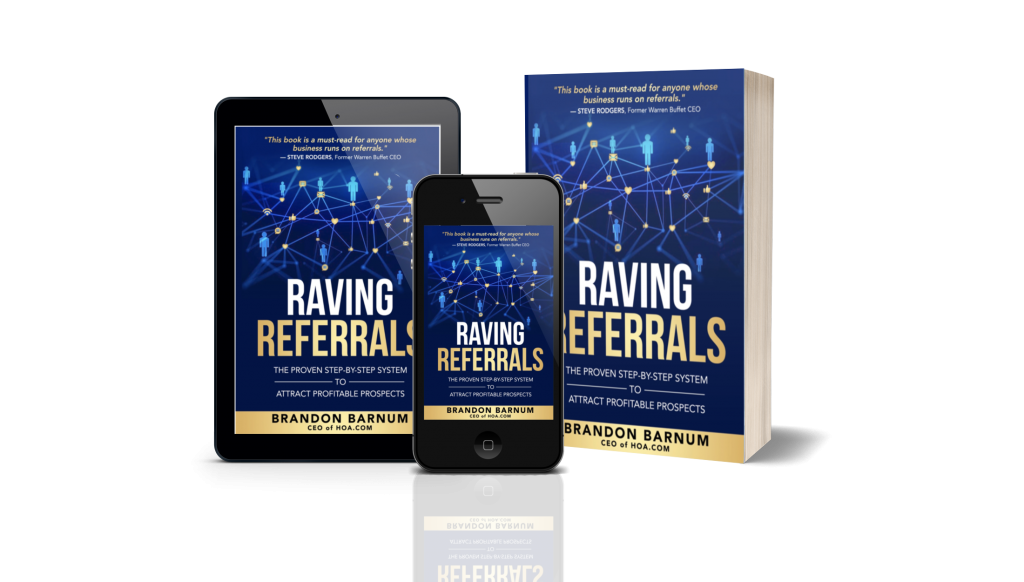
Raving Referrals Book
Are you ready to take the stage and empower people to have more income, more influence, and more impact?
Grab your copy today of Raving Referrals: The Proven Step-By-Step System to Attract Profitable Prospects

Brandon on LinkedIn
A seasoned expert with Visionary Leadership, Brandon Barnum has been building tech companies for over 24 years. As founder and CEO of HOA.com, Brandon is committed to Connecting Communities and Helping Homeowners Connect with Professionals They Can Trust.

Become an HOA.com Certified Pro
HOA.com connects homeowners to professionals you can trust. Our Certified Pros will get the job done right for a fair price. Guaranteed!
We utilize one of the industry’s most comprehensive screening processes to give you peace of mind knowing you have hired a top-trusted Certified Pro.

Sales & Leadership Training
This training is for Business Owners, Entrepreneurs, Sales Representatives, and Business Leaders who want to learn the Secret, the Science, and the System to ultra-high performance and stellar sales results.
